
You can like the appearance of a pair of trousers and still spend the whole day adjusting them. The waistband shifts when you sit, the pockets flare when you walk, or the fabric grips your thighs during the journey to work. Choosing the front design is one part of avoiding that frustration.
When comparing pleated vs flat-front trousers, the useful question is how much room you need through the upper leg and what kind of silhouette you enjoy wearing. Pleats introduce folded fullness below the waistband. A flat front leaves that area visually uninterrupted. Either can look polished when the rest of the cut suits you.
For a Singapore wardrobe, the decision also needs to work through ordinary days: walking between appointments, sitting in an air-conditioned office and heading out for dinner. This guide explains the differences and helps you evaluate them before choosing tailored trousers.
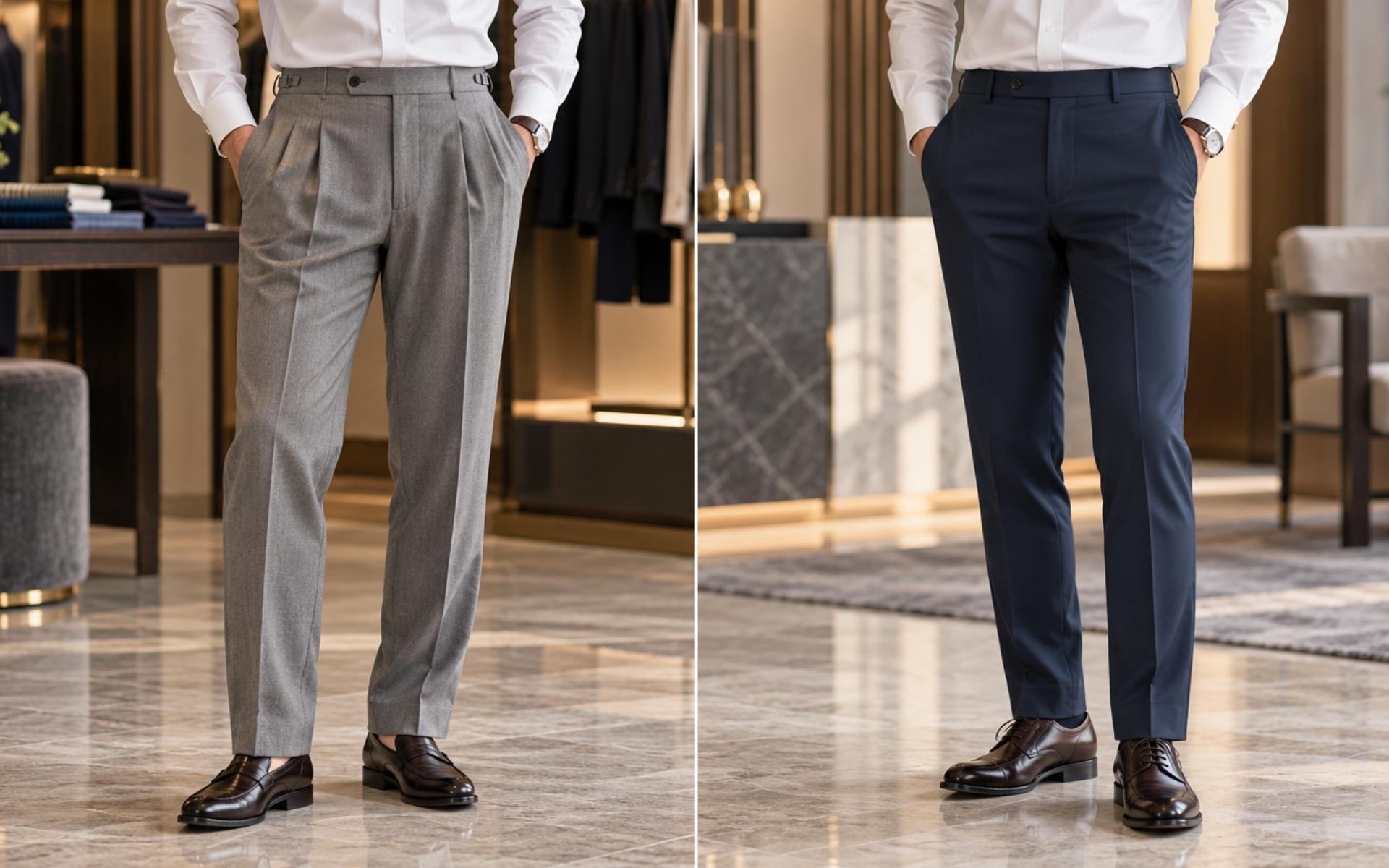
What changes when you add trouser pleats?
A trouser pleat is a fold of fabric secured at the front waistband, with fullness released below it. That fold can provide additional room as your body moves. It is different from the pressed crease running down the leg: flat-front trousers can have a centre crease too.
Flat-front trousers have no such folds at the front waistband. Their appeal is an uncluttered appearance, especially when worn with a tucked-in shirt. However, the absence of pleats tells you little about the overall width. Flat-front trousers can be cut with a generous thigh and straight leg; pleated trousers can have a moderate taper.
Single and double pleats
A single-pleat design has one fold on each side of the front. Double pleats have two on each side, creating more visible detail and, depending on their depth and the pattern, more fullness. The number alone does not determine whether the finished trousers will feel spacious or look bulky.
If you are curious about pleats but prefer understated clothing, a single pleat is a useful design to discuss. If you enjoy a fuller silhouette, double pleats may suit that preference. Treat these as general tailoring options and ask which designs are available for your particular commission.
The distinction matters because choosing “pleated” is only the beginning. Pleat depth, waist position and leg shape all affect the result.
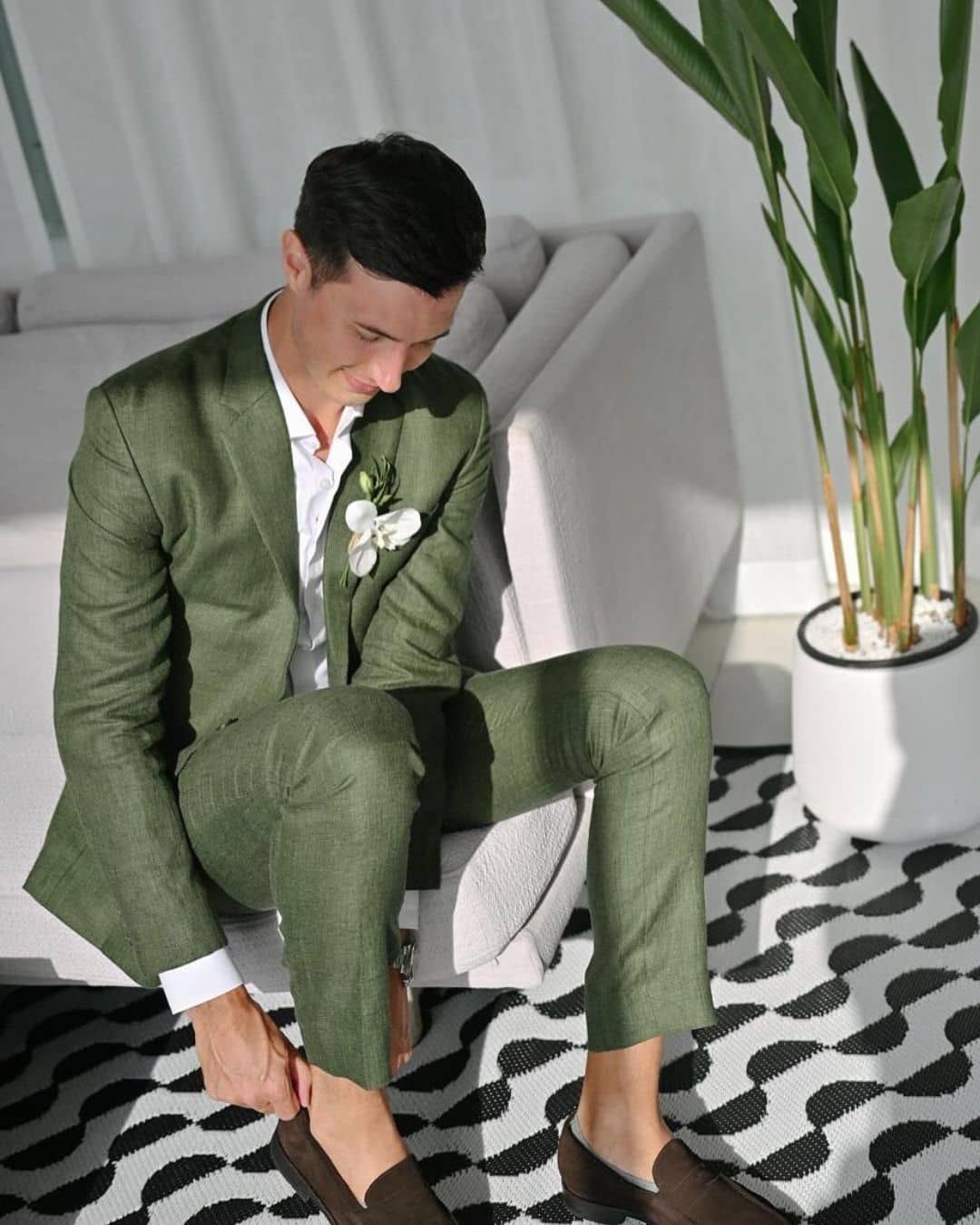
Choose around the way you move
Someone who stands for presentations and someone who spends hours at a desk may notice different things in the same trousers. For the seated wearer, pressure across the lap and upper thighs can be more revealing than the view in a mirror. A pleat can provide useful fullness there, but the trousers still need enough room through the seat and crotch.
Start with your own experience. If existing trousers fit your waist but feel restrictive across your thighs, mention that specific problem. Buying a larger waist size may create looseness at the waistband without giving you the shape you need elsewhere.
When a flat front makes sense
A flat front is a good starting point if you favour a simple appearance and can achieve comfortable movement with the right cut. You should be able to sit normally, walk at your usual pace and bend your knees without feeling that the front panel is stretched taut. You do not need to be particularly slim to wear this style.
When pleats deserve a closer look
Consider pleats if you want additional fullness through the front, prefer a more relaxed upper leg or enjoy visible tailoring details with a tucked-in shirt. Fuller thighs can make this option useful, but body size is not a rule that decides the style for you.
Try to describe both your comfort requirement and your visual preference. “I want room when seated, with a gentle taper below the knee” gives a clearer starting point than simply asking for slim-fit or classic-fit trousers.
Why rise and leg shape matter to both styles
The rise describes the distance from the crotch seam to the waistband. Together with the overall pattern, it influences where the trousers sit on your body. A pair designed for one waist position can become uncomfortable or lose its intended shape if you repeatedly pull it higher or let it slide lower.
Choose a waistband position you can wear comfortably while standing and seated. A higher position may create a longer visual leg line with a tucked-in shirt. A lower position may feel more familiar if you usually wear casual trousers. The right choice needs to account for your proportions and how you dress.
Pleats need space to fall from the waistband. If the cloth is pulled tightly over the hips, the folds may spread while you stand at rest. That is a reason to review the cut and waist position. It does not mean pleats are unsuitable for your body.
Keep the taper in proportion
A very narrow lower leg can catch around the calf and interrupt the way the trousers hang. Equally, an excessively generous leg may feel out of place if you prefer a restrained office silhouette. Evaluate the line from hip to shoe rather than judging the front detail on its own.
For pleated trousers, a gentle taper often allows the extra fullness at the top to flow into a neater lower leg. Flat-front trousers can use the same approach. A straight leg is another possibility for either design. The balance should remain convincing when you walk, not only when your feet are carefully positioned for a photograph.
Make the choice work for Singapore office life
Your trousers may need to handle outdoor walks, long meetings and a meal after work without a change of clothes. In that setting, front design is one comfort consideration alongside fabric, overall ease and construction. Pleats alone do not make a pair breathable, and a flat front does not automatically make it uncomfortable.
For fabric selection, consider how a sample feels and hangs as well as its appearance. Discuss the balance between comfort, crease resistance and the level of formality your workplace expects. A fabric that looks appealing on a small swatch may produce a different impression across a full trouser leg.
For a shirt-and-trousers working wardrobe
When you rarely wear a jacket, the waistband and front remain visible. Flat fronts can give a straightforward finish with a tucked-in business shirt. Pleats add detail and can make a simple shirt-and-trousers combination feel more considered. In either case, avoid carrying so much in the front pockets that it distorts the line.
Keep shirt volume in mind too. A shirt that balloons over the waistband can hide the shape you chose; one that pulls tightly across the torso can look unbalanced above fuller trousers. The aim is a comfortable relationship between the two pieces.
For trousers worn with a suit jacket
Assess the outfit together. A very close-fitting jacket over noticeably full trousers may create a contrast you did not intend. Likewise, a generous jacket can look top-heavy above an extremely narrow leg. If the trousers are part of a suit, bring the jacket into the discussion rather than treating each half as a separate purchase.
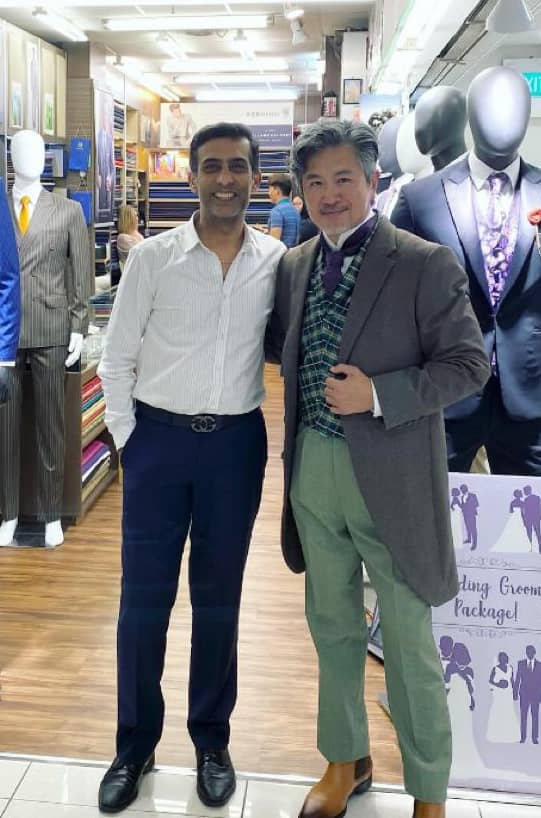
C. Armani Tailors offers tailored shirts and trousers, making this a relevant service to explore when you want to plan everyday pieces around your working wardrobe.
A practical fitting check before you decide
Wear the trousers at their intended height and check them with pockets empty first. This makes it easier to distinguish the effect of the cut from the effect of a phone or wallet. Then repeat a few movements with the items you normally carry.
- Stand naturally. Relax your stomach and use your normal posture. Check whether the waistband stays comfortable and the front hangs without obvious tension.
- Sit in an ordinary chair. Notice pressure at the waist, lap and upper thigh. A pair that is tolerable only while standing will be frustrating at a desk.
- Walk and bend your knees. Look for cloth catching around the thigh or calf. The trousers should settle again without repeated tugging.
- Check the pockets. Persistent gaping with empty pockets can indicate tension through the upper trouser. Adding pleats is one possible design change, but the underlying fit deserves attention.
- Look at the side and back. A clean front should be accompanied by a comfortable seat and balanced leg. Do not approve the fit from a single angle.
On pleated trousers, notice whether the folds sit neatly at rest and release during movement. On a flat front, look for persistent pulling across the lap. Some creasing during wear is ordinary; the question is whether the cloth is under strain or restricting you.
Bring the shoes you expect to wear so the hem length can be judged in context. For more background on evaluating a garment while it is being made, read why tailoring fitting sessions matter.
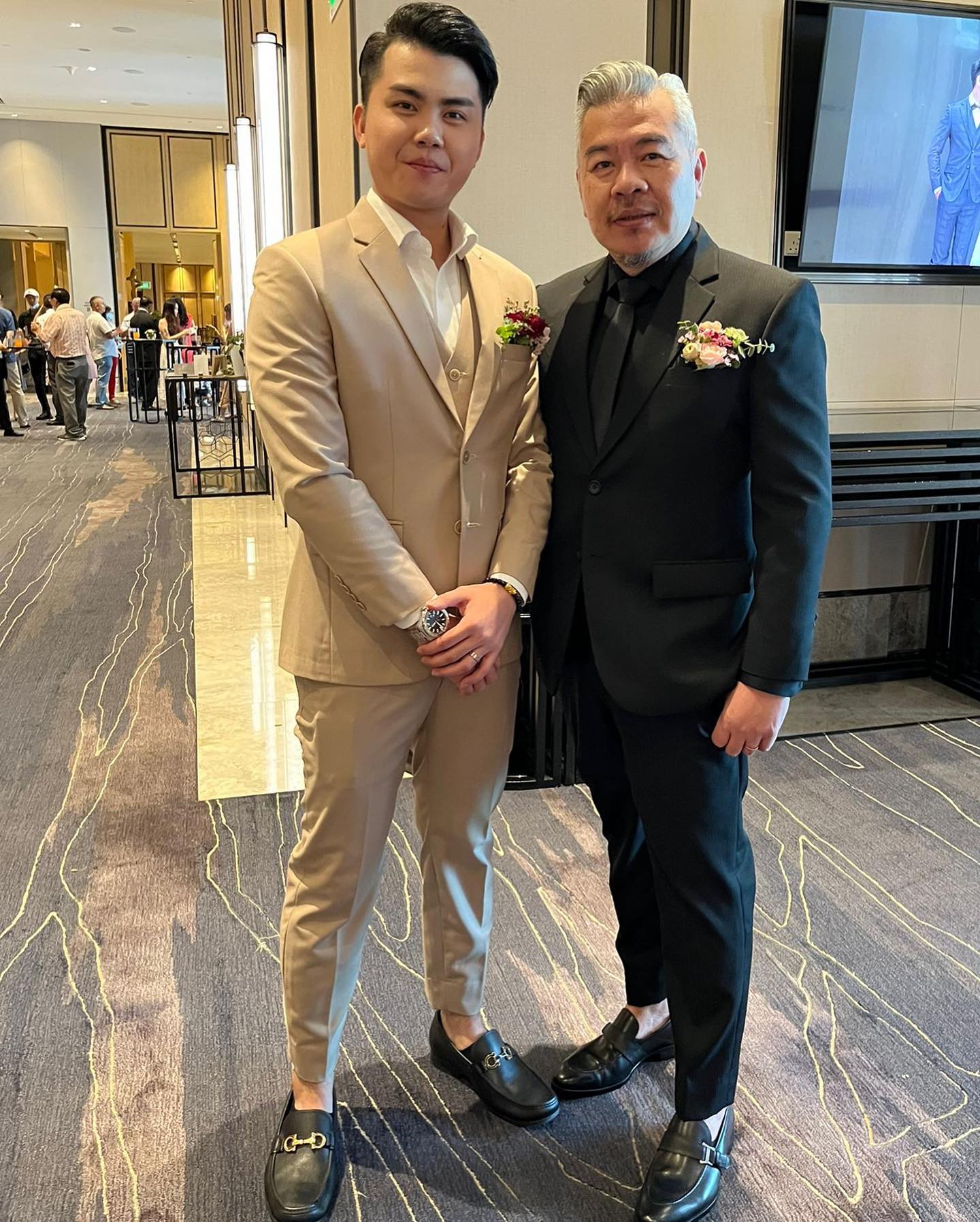
Questions that often settle the decision
Do pleated trousers make you look bigger?
They add fullness, but the visual effect depends on where that fullness sits and how it falls. Shallow pleats in a balanced cut can look restrained. Deep folds combined with an overly generous seat can create more volume than you want. Compare the whole silhouette, including the shirt and shoes, rather than assuming every pleated pair produces the same effect.
Are flat-front trousers always better for formal occasions?
Either front can look appropriately dressed when the fabric, fit and rest of the outfit suit the occasion. A smooth front is a design preference, not a universal measure of formality. For an event with a specific dress code, choose the correct outfit first and discuss the trouser details within it.
Do pleated trousers need turn-ups?
Turn-ups, also called cuffs, are folded bands at the hem. They can complement a traditional pleated silhouette, but they are not compulsory. A plain hem can work too. Decide by considering the fabric, leg width, footwear and the appearance you prefer. Avoid adding a hem detail purely because you believe the front design requires it.
Can I turn an existing flat-front pair into pleated trousers?
This is not a straightforward way to gain room. Pleats require sufficient cloth in the right place, while an existing pair has already been cut and assembled. A tailor would need to inspect the garment before advising whether any change is feasible. If the problem is restricted movement, describe that problem first rather than arriving with a fixed alteration request.
What should I bring to a tailoring discussion?
Bring photographs that show the silhouette you like, suitable shoes and, if practical, an existing pair that illustrates a comfort problem. Explain how you wear the trousers: mostly seated at work, with a jacket, or as separate pieces. Ask about available front designs, fabric choices, fitting arrangements and the quotation before committing. These details turn an abstract preference into a useful brief.
Choose trousers you will enjoy wearing all day
The best trouser front is the one that supports the shape and movement you want. A flat front offers an uninterrupted appearance; pleats offer folded fullness and another way to shape the upper leg. Your decision becomes clearer when you assess the waist position, seated comfort and complete outfit together.
If you are planning tailored trousers for work or smarter everyday dressing, C. Armani Tailors is a place to discuss your requirements. Bring your preferences and any fit concerns so you can ask which available options suit your wardrobe, rather than choosing a detail from a photograph alone.
Visit the C. Armani Tailors showroom at #02-42 Far East Plaza, 14 Scotts Road, Singapore 228213 to discuss your next pair of tailored trousers, or use the Contact Us button below to ask about trouser tailoring and arrange your next step.
0 Comments