
If your trousers fit around the waistband but never seem comfortable, the waist measurement may not be the whole story. They may sit lower than you want, pull when you sit or require repeated adjustment to keep the shirt and jacket looking balanced.
Understanding trouser rise helps explain those experiences. Rise concerns the relationship between the crotch seam and waistband, while the complete pattern determines how the trousers sit around your body. It is connected to fit and styling, but is not simply another name for waist size.
A useful decision starts with where you want the waistband to sit and how the trousers need to feel during ordinary movement. Then the rise, seat and leg shape can be considered together.
There is no single waistband height that everyone must choose. A tailored pair should support your proportions, the clothes you wear with it and the position you can maintain comfortably through the day.
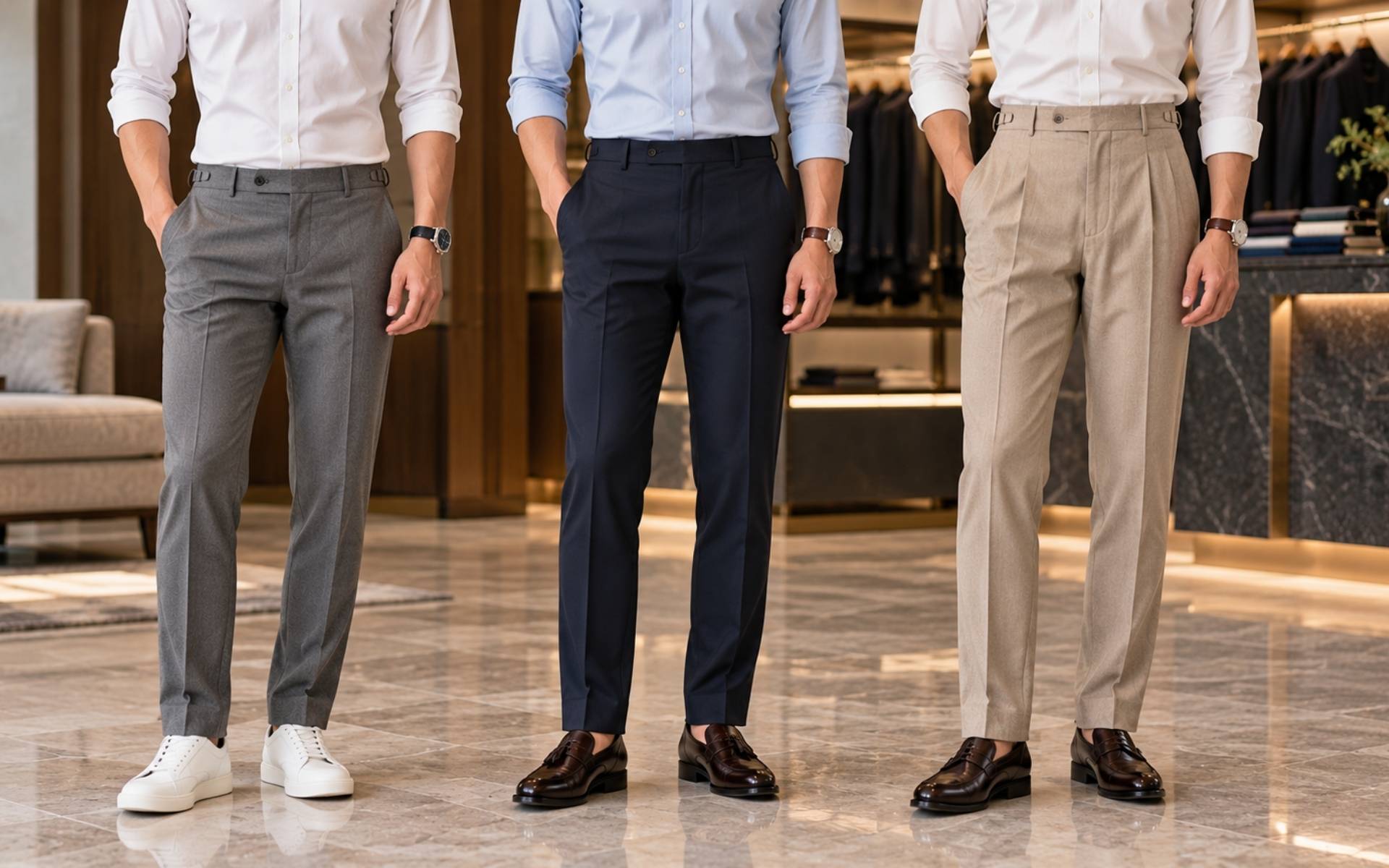
What Trouser Rise Actually Describes
Rise is commonly discussed as the distance from the crotch seam to the waistband. Front and back rise measurements describe different parts of that relationship, so one number does not explain the entire shape of a pair.
The cut must also accommodate the seat, hips and how the body is positioned within the garment. That is why two pairs described as the same rise category can feel quite different when worn.
Rise categories are comparison terms
Low, mid and high rise describe a broad positioning idea, rather than a universal set of measurements used identically by every maker. Ask what a term means for the particular trousers you are considering.
Do not assume that choosing a higher rise automatically makes the waistband tighter or the leg wider. Waist circumference and leg shape are separate decisions, even though they must work together in the final pattern.
When discussing tailoring, describe the position you prefer on your body. Show where existing trousers sit and explain what you want to change. This gives the tailor more useful information than asking for a category without defining the effect.
The aim is a garment designed around an intended position, rather than one that only looks right while you keep pulling it into place.
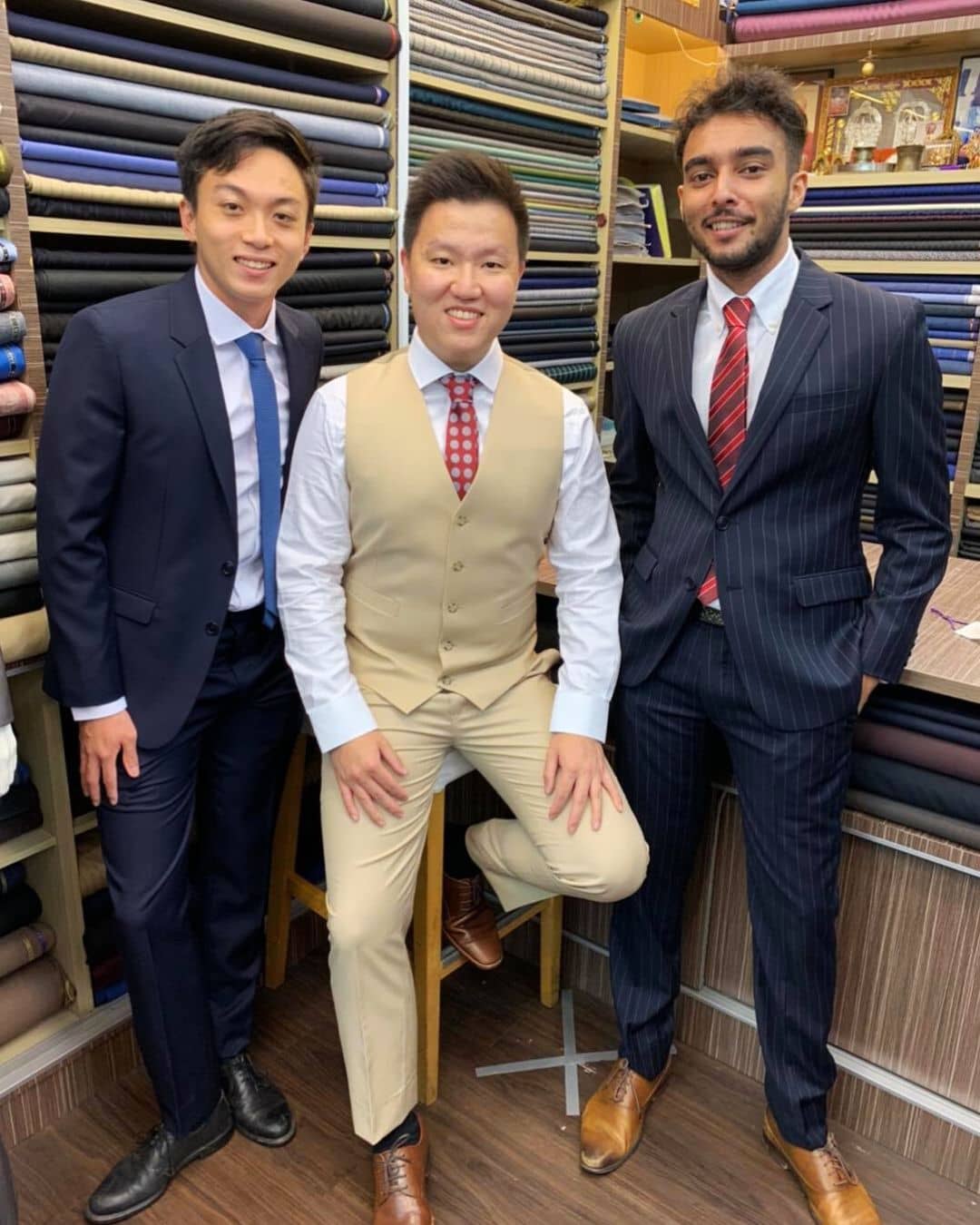
Choose a Waistband Position You Can Wear Naturally
Begin with how you normally dress. If you are accustomed to low-sitting casual trousers, a higher tailored waistband may initially feel unfamiliar. That does not make it unsuitable, but it deserves an actual comfort comparison.
A waistband closer to the natural waist can create a longer visible leg line with a tucked-in shirt. A lower position can feel more familiar to some wearers, while changing how much shirt remains visible below a jacket.
Compare standing and sitting
Notice whether the waistband remains comfortable as you sit normally. It should not rely on an extremely tight belt to stay in its intended place. If you keep moving it up or down to relieve pressure, explain that during the fitting.
Your preferred position also needs to work around the shape of your body. A location that looks appealing in a reference photograph may not settle naturally on you. The complete cut needs to support the choice.
Try to keep the comparison specific. “I want the waistband above where these casual trousers sit, without pressure when seated” is a clearer brief than simply asking for high-waisted trousers.
Take time to distinguish unfamiliarity from discomfort. A different position may feel new, while persistent pinching or pulling is a fit concern worth assessing.
Look at the Relationship With Your Shirt and Jacket
Waistband position changes the proportions of the complete outfit. With a tucked-in shirt, it determines where the upper body gives way to the visible trouser line. With a jacket, it influences the shirt area shown below the fastening.
A higher waistband can reduce a visible gap between jacket and trousers, but the effect depends on jacket length and button position. The pieces should be viewed together rather than selected from unrelated references.
Include a waistcoat if you wear one
If the outfit contains a waistcoat, check how its lower edge relates to the waistband. A shirt gap can appear when the garments are designed around different proportions. Moving the trousers higher is not always the only answer.
For a shirt-and-trousers wardrobe, the waistband is more visible. Consider how much shirt volume gathers above it and whether that looks balanced with the leg shape.
Our article on how a shirt works with a bespoke suit covers the broader interaction between layers. For rise, bring your usual shirt and any relevant jacket into the fit discussion.
Assess the outfit from a normal viewing distance. A close-up of the waistband cannot show how the proportions work from collar to shoe.
Understand What Rise Can and Cannot Solve
Rise is one part of a trouser pattern. It cannot independently solve every problem through the seat, thighs or crotch. A garment that pulls while seated may need assessment in more than one area.
Describe where you feel pressure and when it occurs. Does the back waistband move down? Does the front feel restrictive? Do the trousers catch at the thigh as you walk? These observations help identify the relevant relationship.
Keep the front design separate
Pleats and flat fronts concern the cloth arrangement below the waistband. Either can be considered with different rise choices. Pleats do not automatically guarantee a comfortable high rise, and a flat front does not require a low position.
The existing pleated-versus-flat-front comparison addresses that design choice. Here the primary question is the intended waistband position and whether the complete pattern supports it.
If pockets flare or the cloth pulls across the hips, ask for an assessment rather than assume the rise alone is wrong. Similarly, an excessively low crotch position should not be confused with a useful increase in waistband height.
A clear description of the experience is more valuable than arriving with a predetermined instruction to add a fixed amount to one measurement. The tailor needs to consider the finished shape.
Use a Practical Fitting Check
Wear the trousers at their intended position with the shirt tucked as you normally wear it. Use the footwear you expect to pair with them, because changing waistband position also changes where the hem falls.
Then assess ordinary activities without forcing unusual movements:
- Stand naturally and allow the cloth to settle.
- Sit in a normal chair and notice the waistband and seat.
- Take a few steps and turn without adjusting the trousers.
- Return to standing and check whether the waistband remains where intended.
- Look at the shirt, jacket if used and trouser line together.
Note persistent problems and describe them precisely. Temporary folds during movement are expected; repeated slipping, restriction or a need to pull the garment into place deserves discussion.
For the broader purpose of appointments, see our article on tailoring fitting sessions. A rise decision becomes more useful when you connect it to actual wearing feedback.
If several changes are proposed, ask how they relate. Understanding why the waistband, seat or leg is being refined helps you judge the next fitting without treating every adjustment as an unrelated correction.
Plan New Trousers Around Their Main Use
Trousers worn beneath a business jacket may need a different relationship with the upper body from a relaxed shirt-and-trousers pair. Tell the tailor which use matters most, especially if you hope one pair will serve several combinations.
Bring an existing pair that illustrates a useful comparison. It might show a waistband position you like but an uncomfortable seat, or a good leg shape with a rise that feels too low. Explain both the successful and unsuccessful parts.
Distinguish a new commission from an alteration
Changing rise in an existing pair can be constrained by the garment’s cut, construction and available cloth. Ask for an inspection before assuming it can be changed substantially. Buying a larger waist size is not necessarily an effective way to achieve a different rise.
If the trousers are part of a suit, our guide to altering or replacing a tight suit offers wider decision context.
For a new pair, C. Armani Tailors’ tailored shirts and trousers service is a relevant starting point. Discuss the available designs, intended waistband position and daily activities.
For example, a desk-based wearer may prioritise seated comfort while wanting a clean line with a tucked-in shirt. Another may prefer a more formal waistband position beneath a jacket. Both briefs benefit from explaining the actual use rather than relying on the same rise label.
Choose Trousers That Stay Where They Belong
A good rise decision connects waistband position, comfortable movement and the proportions of your outfit. It works alongside the seat and leg shape rather than replacing those fit considerations. The trousers should settle naturally where they were designed to sit.
Bring your preferred waistband position and any existing fit concerns to C. Armani Tailors when discussing tailored trousers. A representative pair and the shirt or jacket you normally wear can make the conversation more specific.
Visit the showroom at #02-42 Far East Plaza, 14 Scotts Road, Singapore 228213 to explore trousers suited to your wardrobe, or use the Contact Us button below to discuss your requirements for fit and everyday comfort.

0 Comments